Case Study: Suspended Access & Swing Stages for Bellevue Glazing
Bellevue’s skyline is growing up. As the city evolves into a dense metropolitan hub, maintenance projects are shifting vertically. This case study looks at a recent 25-story glazing retrofit in downtown Bellevue, showing why suspended access systems (swing stages) are often the only viable solution for high-rise work.
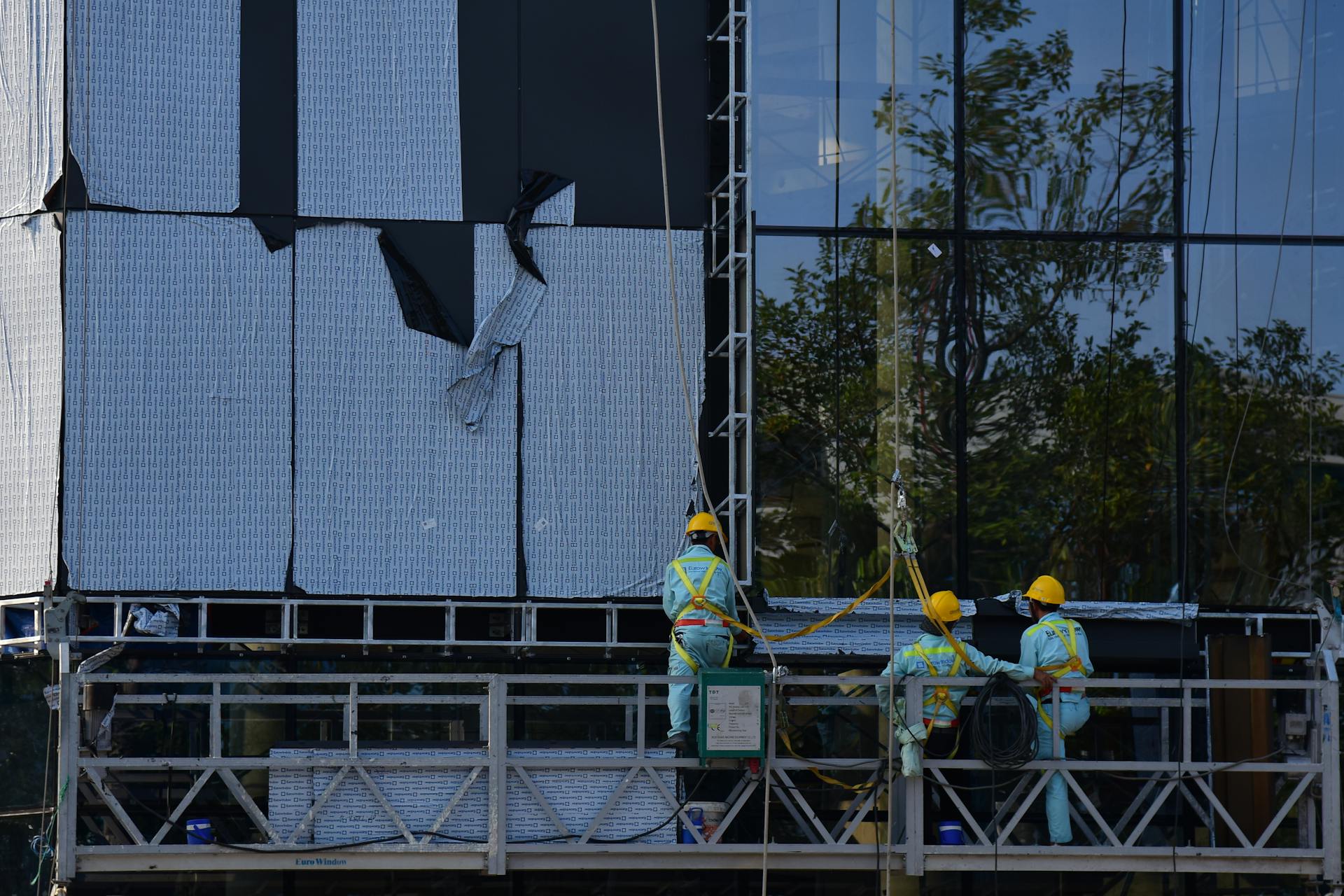
Suspended swing stage scaffolding on a high-rise building for glazing work
The Challenge: Access Without Obstruction
The project involved complete exterior sealant replacement and glass repairs on an occupied commercial tower. The logistical hurdle was the «footprint.» With active retail tenants on the ground floor and heavy pedestrian traffic, building a traditional fixed-frame scaffold from the ground up was impossible. It would have choked off the sidewalk, annoyed tenants, and the cost of scaffolding rental for 25 stories of steel would have blown the budget. The solution was clear: Modular Swing Stages.
The Solution: Rigging from the Top Down
Instead of building up, we rigged down. Partnering with Seattle scaffolding specialists, the GC deployed four modular swing stages suspended from heavy-duty roof outriggers. This setup allowed glaziers to move with the work, maintaining an ergonomic height at all times. This efficiency is the key variable when calculating how much to rent scaffolding. While the daily rate for motorized stages can be higher than static frames, the labor savings on erection and dismantle are massive. We rigged in days, not weeks.
Safety & WAC Compliance
Operating suspended loads over a city street requires strict adherence to WAC 296-874. Even though this was Bellevue, we apply the same rigorous safety standards we use for SDOT permits in Seattle.
- Fall Protection: Every worker on the stage had a Personal Fall Arrest System (PFAS) attached to an independent lifeline—non-negotiable.
- Inspections: A «Competent Person» inspected the rigging, hoists, and roof anchors daily, ensuring the gear was safe despite the shifting Pacific Northwest weather.
Ground Protection: The Sidewalk Canopy
Just because the work is on the roof doesn’t mean you ignore the street. The «drop zone» had to be secured. We installed a heavy-duty pedestrian canopy (sidewalk shed) along the frontage.
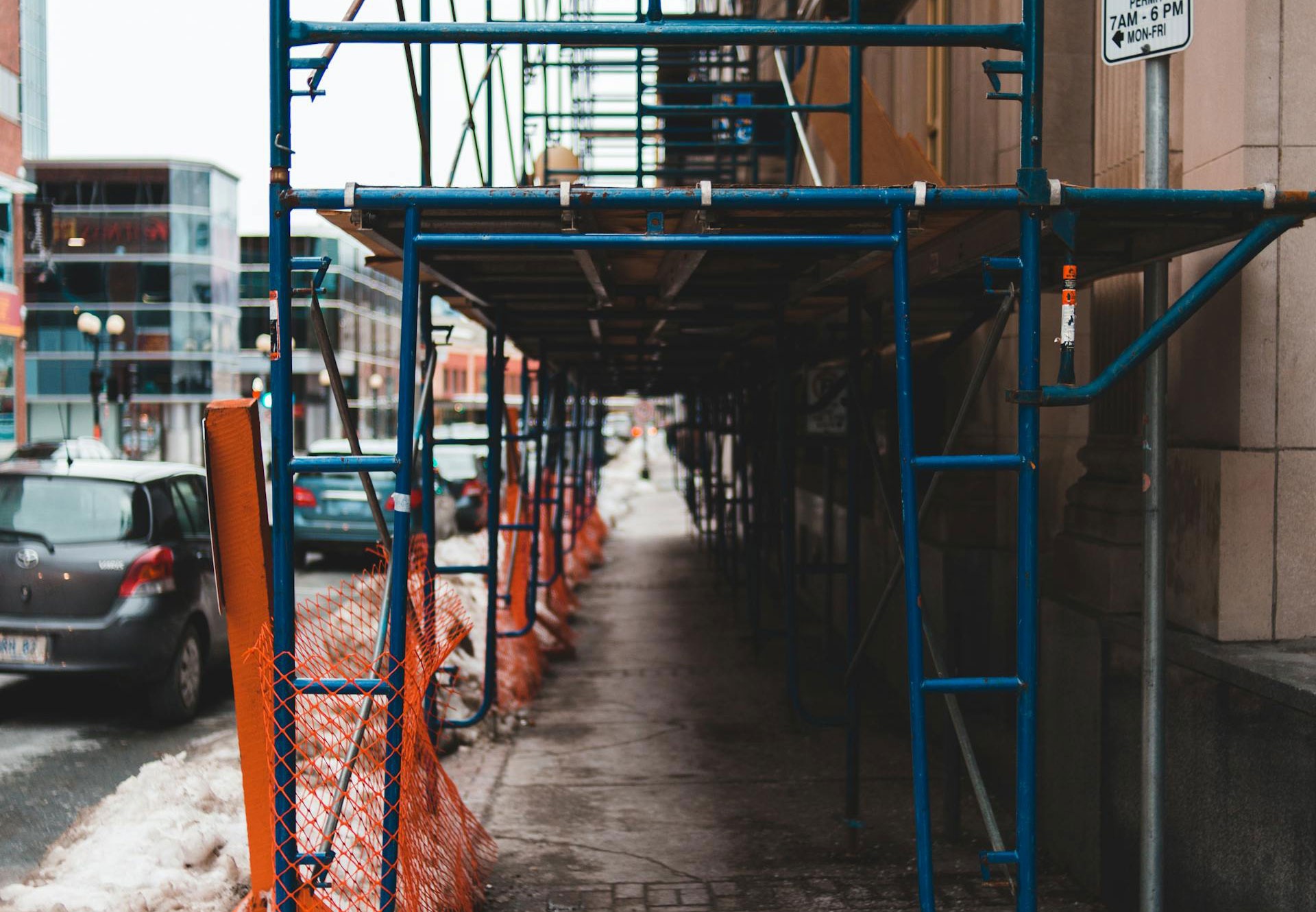
Heavy duty sidewalk canopy providing overhead protection for pedestrians in Bellevue
This structure served two purposes:
- Public Safety: Impact-rated beams protected pedestrians from any potential falling debris.
- Staging: The deck of the canopy provided a landing zone for materials, keeping the sidewalk clear. This dual-system approach (Swing Stages up top + Canopy below) is the standard for professional commercial glazing projects.
The Bottom Line: 30% Savings
The numbers don’t lie. A retrospective analysis showed that choosing swing stages over fixed frames reduced the total access budget by approximately 30%. Why? Mobility. The crew could finish a «drop,» relocate the outriggers laterally, and start the next section in a single shift. Static scaffolding charges you for the whole building at once; suspended access focuses your budget strictly on the active work zone. For high-rise maintenance in the PNW, swing stages aren’t just an option—they are the strategic choice.