WAC 296-874 Update: Scaffold Safety Standards for General Contractors
In Washington State, L&I (Department of Labor & Industries) calls the shots. For General Contractors in the Puget Sound, knowing WAC 296-874—the code dedicated to Scaffolds—isn’t just legal homework; it’s survival. With Seattle’s construction boom, L&I inspectors are everywhere. Adhering to these standards is the only way to avoid heavy fines, project shutdowns («red tags»), and workplace injuries. This guide breaks down the code and how it affects your Seattle scaffolding rental.
The “Competent Person” Rule
The biggest catch in WAC 296-874 is the “Competent Person.” You cannot erect, move, or dismantle a scaffold without one supervising. Whether it’s a small remodel or a downtown high-rise, this person must be capable of identifying hazards immediately. When renting scaffolding in Seattle, be clear on responsibilities. The rental company guarantees the gear meets the code, but the General Contractor is responsible for the daily checks. Your Competent Person must inspect the assembly before every shift and after every storm—which, in the Pacific Northwest, is often.
The 4:1 Safety Factor
The code is simple: scaffolds must support their own weight plus four times the maximum intended load. This “4:1 safety factor” is non-negotiable. When calculating the cost of scaffolding rental, don’t cut corners on capacity. Using undersized frames for heavy masonry or roofing loads is a recipe for disaster. The code demands:
- Footing: No cinder blocks. Scaffolds must sit on base plates and mudsills.
- Planking: Full decking between uprights. No gaps.
- Stability: If the height-to-base ratio exceeds 4:1, you must use ties, guys, or braces.
Public Safety & Sidewalks
In the city, WAC rules mix with SDOT permits. If you are building over a sidewalk, you aren’t just dealing with L&I; you are dealing with public safety. Sidewalk protection (or a “sidewalk shed”) is mandatory if there is any risk of falling tools or debris. WAC 296-874 requires these canopies to be strong enough to withstand impact, not just serve as a visual barrier. If you can’t barricade the area, you must build a tunnel.
Navigating Permits: SDOT vs. L&I
You can’t just build on the street. You need a Seattle Street Use Permit. The City requires site plans showing exactly where the scaffold legs sit and how pedestrians will pass. Use the City of Seattle permit search to check your status. Nothing stops a job faster than an inspector seeing a setup that doesn’t match the permit. If your scaffolding rental provider installs the gear, ensure their engineering drawings match what you submitted to the city.
Fall Protection & Access
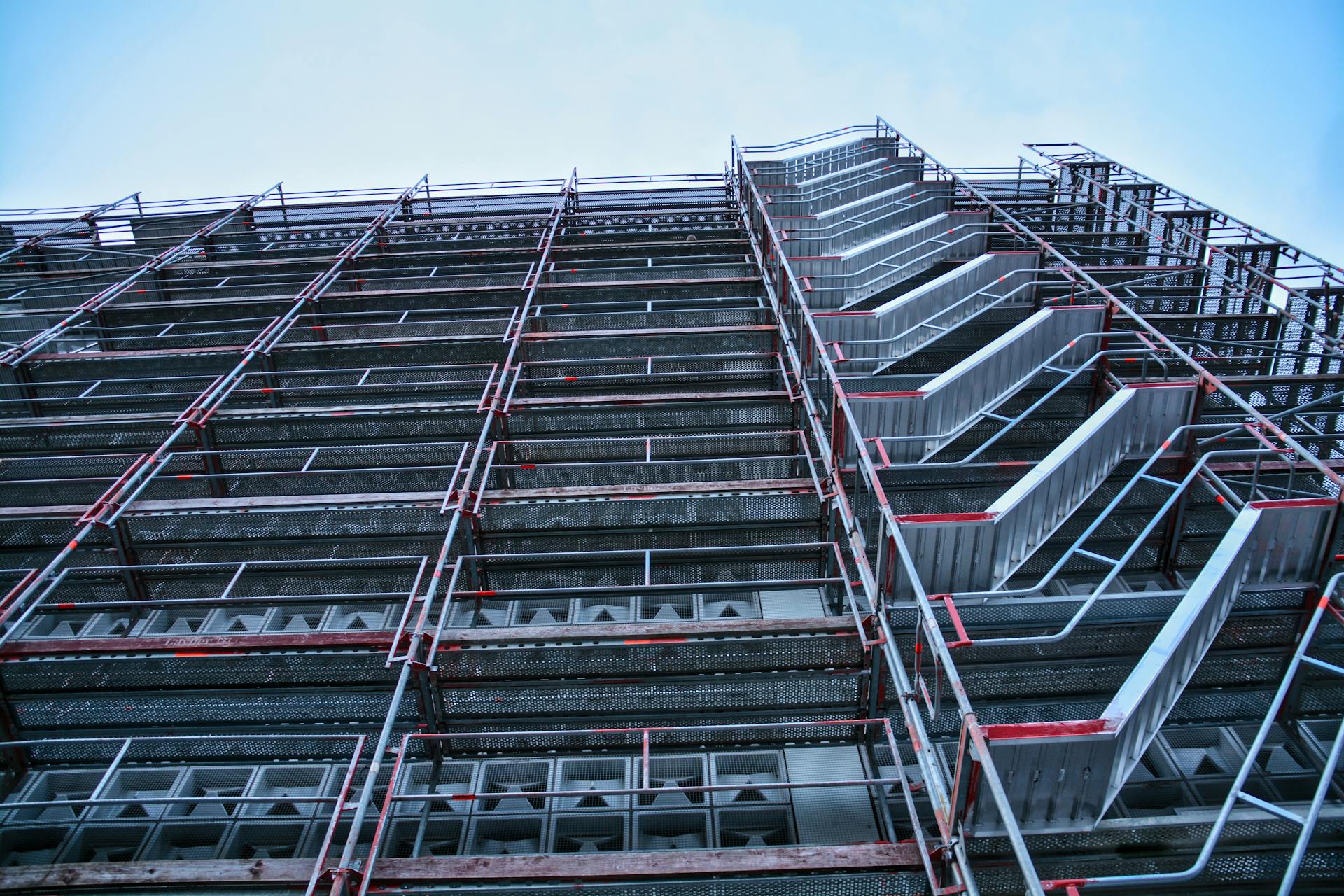
Falls are the #1 killer in construction. WAC 296-874 enforces strict guardrail heights (38–45 inches) and forbids using cross-braces as guardrails. Also, stop climbing the frames. Unless the frame has a built-in ladder design, you need proper access. Stair towers or attachable ladders are standard for compliant WA scaffolding. When asking “how much does scaffolding cost to rent,” always factor in the stair tower. The cost of a proper stair is nothing compared to a single L&I citation.
The Economics of Compliance
Renting from a certified pro mitigates your risk. Reputable rental companies ensure their inventory—from tubes to pedestrian canopies—meets ASTM and OSHA/WISHA standards. For roofing companies in Seattle, renting often comes with engineering support. This guarantees your setup meets the load-bearing requirements, shifting the liability of the design away from your crew and onto the engineer.
Conclusion
Ignoring WAC 296-874 isn’t an option. It requires rigorous daily inspections, high-quality Seattle scaffolding equipment, and strict adherence to SDOT permits. By prioritizing safety and structural integrity, you keep your site open, your crew safe, and your profits secure.